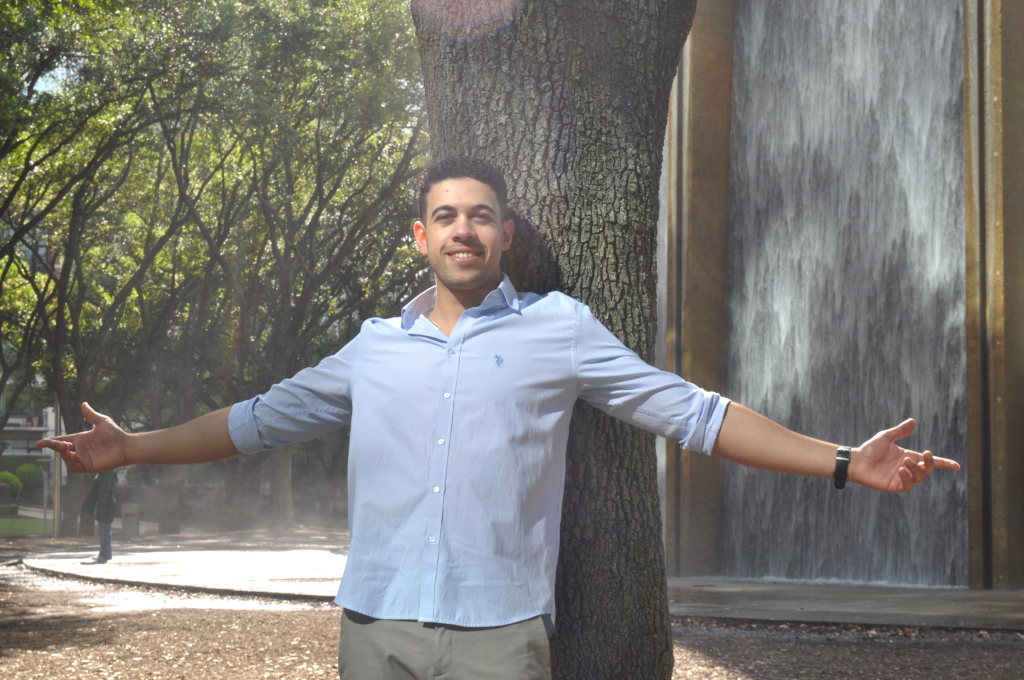


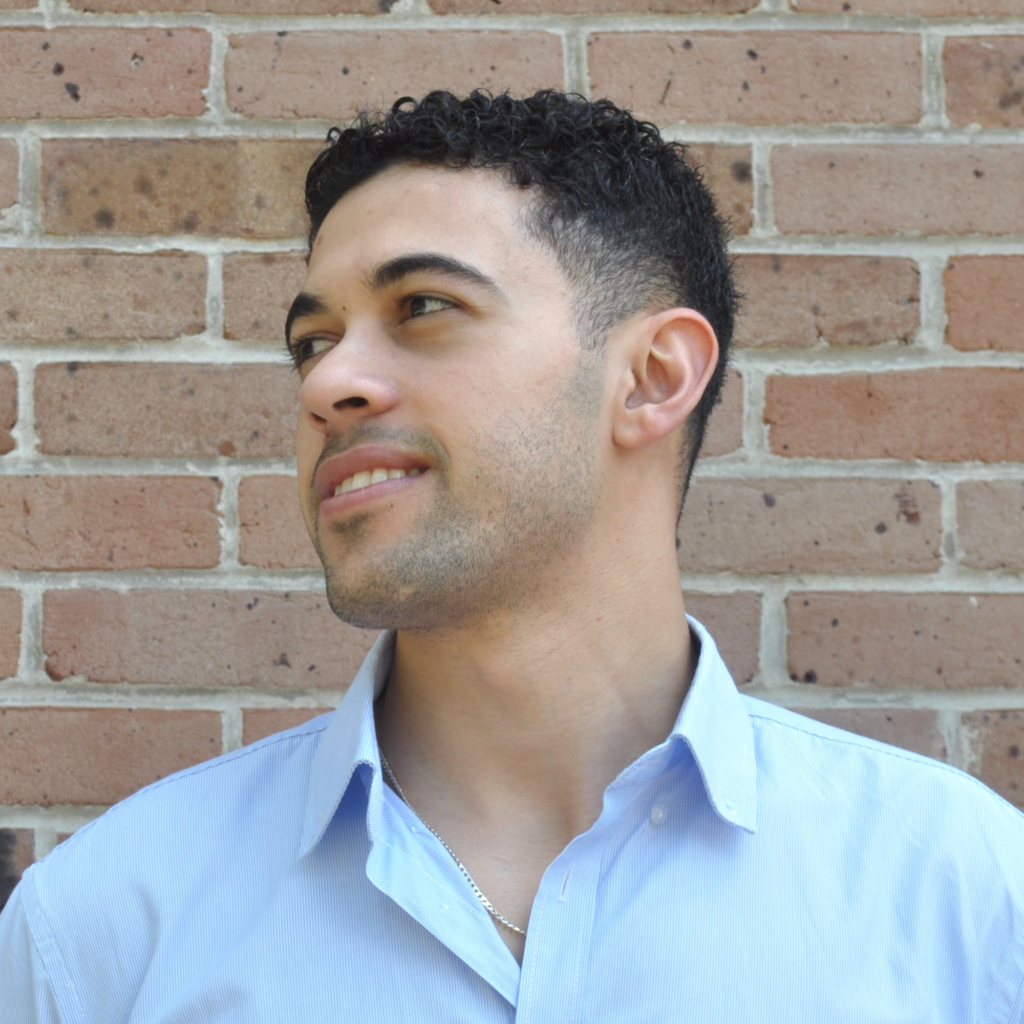
It’s dark outside, the sun hasn’t peeked from over the horizon quite yet, but it’s calm and a little windy. At the local market, the sound of a crate containing eggplants slips off a table hitting the ground breaks the silence for the day. It only gets louder from here as everyone, market-goers and vendors, fill the empty space with indiscernible dialogue and footsteps of the locals trying to find the perfect musac or bag of onions for their musakhan. Beyond the stillness of the outside lies a layer of mucky air and water, Mahmoud Zaqout rubs his eyes open, much like the market outside his family’s apartment, prepares for his family members to awaken and begin their chaotic morning in their cramped living space.
Zaqout and his seven siblings prep themselves for another day of school, as they all leave the apartment together. Just outside his building, his friends and cousins congregate to their usual meeting spot before heading off to drop off a few at a time at the schools that line up right next to the other one. As per routine, Zaqout walks past the soccer fields and finds himself at the entrance of his high school and places his hand on the door handle.
Growing up in Palestine, present day Zaqout reflects on this childhood, “I think it was a I had a very rich and full childhood growing up. The reason being, I’ve had lots of siblings and cousins and parents who let me pretty much be all day on the streets.” Between the schools, the markets, and his favorite beach, Zaqout walks several kilometers per day as opposed to the car scene he sees now. “I lived in a pretty tight neighborhood in the refugee camp, so you would know everyone, the density was about 5,000 people per square kilometer. So, like, it was pretty dense.” Zaqout said.
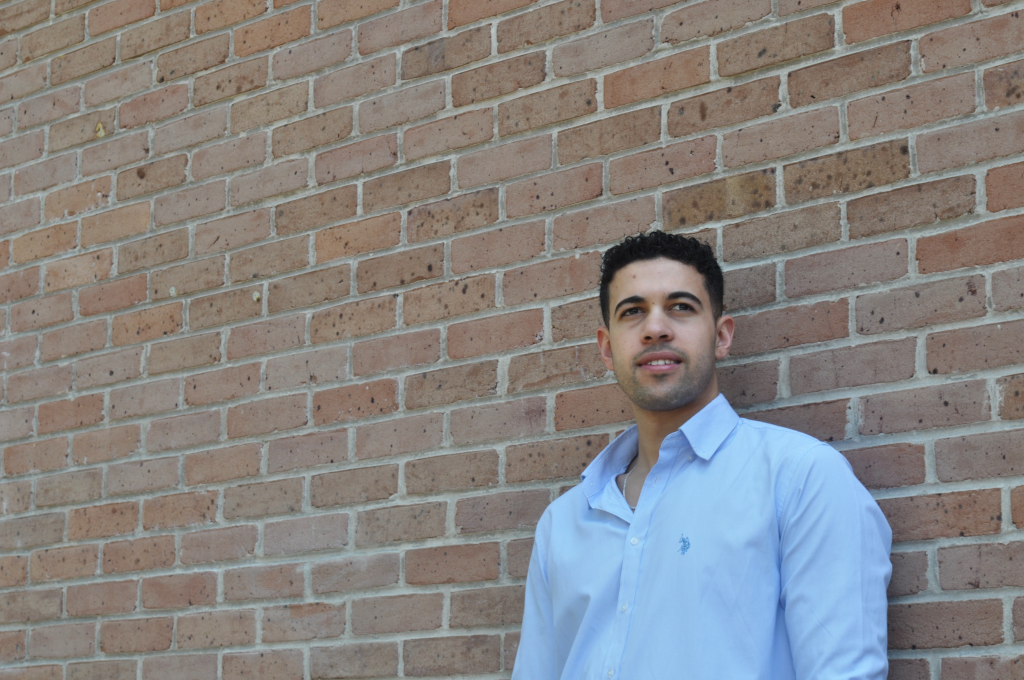
The parents Zaqout grew up with always raised him to be focus and do well in school. His mother was a hairdresser and his father worked at a shoe factory, but they saw great things for their children. His parents wielded a range of children, five boys and three girls, whose interests ranged from a wild soccer player and a sensitive artist. Zaqout speaks fondly of his younger brother of two years, “he’s obsessed with animals, like he’d always bring a dog into the house. He just knows animals feel comfortable in him, and he understands as well.“ Zaqout and his younger brother both had the middle child experience, but in a family of eight children “you don’t always get much attention as a kid, and you have to find you own kind of story, your own way to stand out.”
Outside of his siblings, Zaqout’s best friend, whose name is also Mahmoud, is someone who Zaqout found himself spend much of his time with, including taking walks as part of their living experience. “We pretty much did everything together. We went to the same schools. We’re pretty much in the same classes. It’s by luck, but we happen to do most of our programs and extracurricular [activities] together, so he was my walking buddy.” Zaqout said.
Beaming from spending a couple hours at the beach, eight year old Zaqout wiped the sweat away from this forehead which trickled down to his brow and reached the top of his older brother’s shoulders; instinctively his brother moved his arms back grabbing Zaqout’s legs from ground, turned his head and gave him an equally bright smile. It was a moment in life Zaqout had not fully grasp life in Palestine; he wasn’t quite yet ready for the life changing years that followed this one. “The mentality, you don’t even think about your life. You’re just waiting, surpassing life, and you’re patient. And when you’re in that mentality of surviving you cannot recreate. You cannot be you cannot, like, use your higher cognitive functions of materials, making the noticing patterns.”
At the age of 14, Zaqout’s eyes were wide open, the feeling of being disconnected from the rest of the world crept into his mind as he watched a movie a cable television. It’s an unfamiliar feeling where the characters woke up on Christmas day, and the family rushes outside plowing into two feet of snow. It was something Palestinians never experienced, but he wanted that. He wanted to dress up for Halloween, spend time a shopping mall, drive a car on the highway; he wanted all of that — was that living life? “If you were born as a kid and your people are telling you you’re a victim and you’re stuck in the city, and your whole purpose is you can die any moment. And you know what? It’s okay. This is what you should do, and this is what you should like. It’s just, I’m just conditioned to not really have even an expectation to live life. You expected to live life?” Zaqout said. Life in Palestine was so different that the movies he was watching.
“It was during at a time where I was insanely depressed. It was 2014, so it was 52 days of bombardment, random artillery shells from tanks, shells from the sea, airplanes, just my area was not the safest area at the time”
Zaqout came to the abrupt decision to leave Gaza. He needed to leave and find another country where he could apply himself better, “after the 2014 war, I made a promise myself that I’m not even like two, three years and I need to leave this city.” At the local library, Zaqout found a book called Learn English Without a Teacher, which put the wheels in motion for his exodus. He finished the book in a week. Many thoughts raced through his mind, including realizing he could not raise children here. “It was during at a time where I was insanely depressed. It was 2014, so it was 52 days of bombardment, random artillery shells from tanks, shells from the sea, airplanes, just my area was not the safest area at the time.” Zaqout recalls. Fearing judgment, he kept the secret of wanting to leave Gaza from his family, relatives, teachers, and even his closest friends.
Just two years later at age 16 on a Wednesday, Zaqout steps into a taxi and pulls out his well worn textbook and opens to the dogeared page where he recites English words for practice. He studied his way into the third year of a rigorous after school program called Bridge Palestine, which prepares students that want to leave Gaza and go to prestigious universities such as Oxford. The selected students wrote essays and practice conversations. The taxi stops by the school, Zaqout meanders around thinking about how grateful he is to his friend who initially introduced him to the program. She had similar dreams to Zaqout, who also wanted to leave for more opportunities; she was well on her way to the United Kingdom. “She’s really doing great. She is an insanely influential and passionate person; so many ways she inspires all of us.”
Class finished up for the day, without a second thought, Zaqout grabbed his books and pens and tossed them into his backpack before catching up with his friend. They walk side by side practicing their English on the way to the coffee shop. The two friends sat the same table, the one with the small chunk missing from the side no one wanted to sit at. They did their homework in peace, some days not saying anything to each other. They were focused. Daylight ran out, the friends made eye contact with each other, looked down at their notebooks and leave; they walked back to their neighborhood, again — some days not saying anything to each other. They were exhausted.
Coming back to his family’s apartment, Zaqout greeted his mom and which ever of his siblings were present at the time. It was time to sleep and plan for tomorrow — wake up at six, pray at the mosque, walk to school, then head over to the public library.
The grind would continue for months, until Zaqout was ready to leave for the University of Oklahoma in the college town of Norman. A choice that come by as they approached Zaqout with a presentation of their school, programs, and a full scholarship. A combination of these things and knowing many of his high school friends would also be attending there diverted him from the UK and other places.
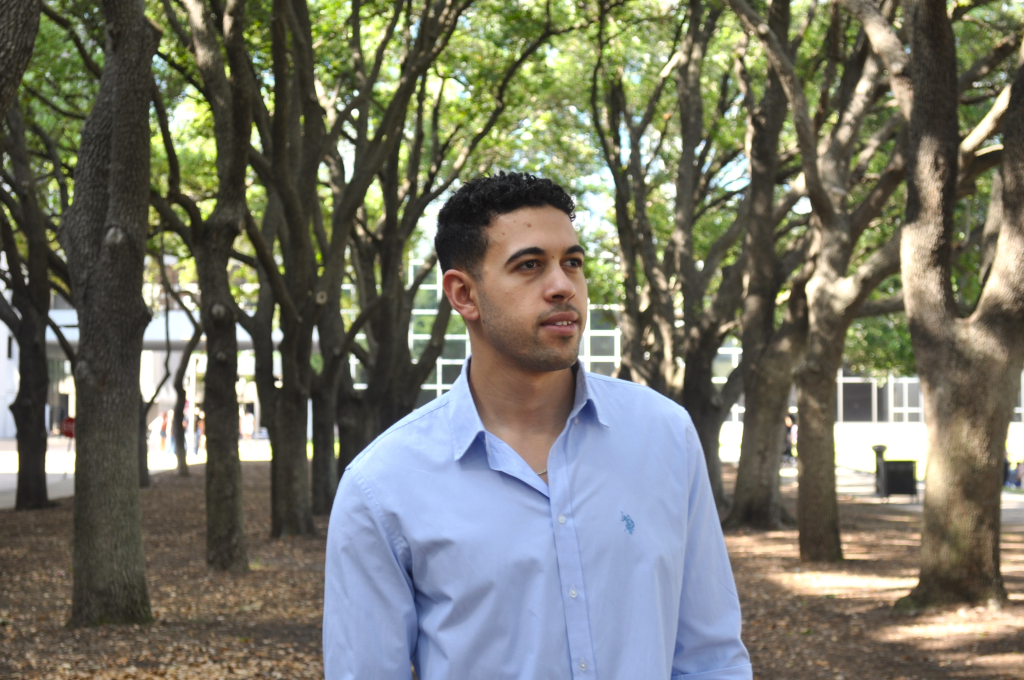
Zaqout left Palestine to study engineering in the States, but the memories of his mother pulling all nighters to help him study, spending time with his mosque group, and running to the beach at a moment’s decision all remained with him. Even for Zaqout, coming into a foreign country challenges a person to find a place where they belong. “I had this moment in my life, I would call it my hippie phase. I was into mindfulness and discovering myself, and I wouldn’t say no easily, I would say yes a lot, I would have multiple friend groups. I would say I was very lost, and I wasn’t sure what I was doing with my life, and I had pretty bad grades my first semester and I thought I was going to lose my scholarship” Zaqout said.
On the first day of Ramadan, Zaqout closed his book, leaned back in his chair and took a look around the sparsely populated library with the sun starting to set down just outside the windows of the building. He swung his backpack over his shoulder, not bothering with putting his arm through the other shoulder strap then made his school cafeteria. Zaqout arrived as if his body just finished marathon training, and then he pulled and felt the resistance of locked door. The cafeteria was closed. His face and body sunk a little lower — marathon training continues.
Coupled with that, many of the things Oklahoma offered brought unfamiliar feelings to Zaqout — having to integrate himself into an American culture, the majority of people not sharing the same religion, and even the occasional racist encounters. His high school friends and the international community always backed him up, but he knew he needed to change and expand his group. “Making American friends, they don’t think the same way, they don’t have the same experience I do.” Unlike the shores of the beach Zaqout always found comforting, the waves of American society hit him like a once in a decade storm thrashing through the once still water.
Despite the subpar grades in his first semester and much like many other times in his life — he adapted. Zaqout recovered from a tumultuous first semester by taking some course, and changing his major from biomedical engineering to chemical engineering. “So I switch to chemical engineering, because I knew I’ll do chemical engineering, but if I’m still into biomedical engineering, I can do my masters in biomedical engineering, but then I realized I freaking love chemical engineering and it’s the best decision, so I’m happy about that. It challenged me enough, and it kept me curious.” Zaqout said.
In one of Zaqout’s most engaging classes, Professor Horst Hahn continued his stories that always had his students wanting more. Zaqout credits Professor Hahn as an influential person during his time at Norman. “I like professors who have a story to them and care about their students, and let me speak my mind. He would invite me to his office and discuss things that we’re about his classes.”
Into his second year, Zaqout assimilated himself like the struggles of the initial year never happened. He tailgated at football games, got along with his professors, and met his classmate Diana, who would become his girlfriend just a year later. She become an influential person in his life, “it was much fun and she definitely gave me a lot of structure.” Zaqout said.
Zaquot eventually found the kindness of Oklahoma, developed a support system, and realigned his priorities. “I think I made the most out of it, Oklahoma has given me so much, it’s given me so much love. Oklahoman are such nice people.” Zaqout said. But that wasn’t enough — much like Gaza, he felt like he needed to leave Norman for a more diverse city.
Now living in Houston for a couple years, Zaqout established himself as a process engineer at a midsize EPC firm. It has mostly been an overall positive experience for Zaqout, stating the company culture has been up to par with his expectations. “I was lucky enough to make a couple friends that I call my friends.” Zaqout said. On the other side of it, he remains unsure of the industry and would like to work in a field that could be related to curing cancer, renewable, or even helping Palestine someday – certainly within his character.
Zaqout describes his ideal working situation involves working with friends in research and design related to the the environment or biomedical. Being in a casual environment with a nice view of the outside would be nice bonus as well. A place that blends being able to “wear a funny shirt and not worry to much” with “business management and core engineering.”
On the short list that has contains his mother and Professor Hahn — it was Zaqout’s manager, Derek Hansen, who shaped his professional workplace character. “I like his quiet confidence and that he is someone who can handle a lot and not break under pressure and still be nice and still be patient. It’s very normalized for people to lose their temper and be an ass to you just because the pressure and tremendous work. It’s very refreshing to meet someone who can treat you nicely and listen to you, control their feelings.“
Over the last handful of years, the people Zaqout surrounds himself has rapidly changed, which not difficult to imagine missing people from Oklahoma and especially Palestine. Conversations with his best friend in Palestine, who he has not seen in eight years, was once a weekly call Zaqout looked forward to has become a monthly task, and devolved into an awkward chore every few months. “I know he does expect me to call him more, because I’m the one who should be getting in touch more. I wouldn’t open to him with my life as much, I felt like we’re not that close any more to talk about my life. If I can’t talk to you about my life and ask for advice and be comfortable that way, we can’t be friends like that.” Zaqout says. It’s an inevitable feeling the person experience in their lifetime with even the people closest to them. Despite the natural growth apart, Zaqout has always checked on to him with the ongoing wars.
The idea of the American dream was sold to all Americans, the guise of prosperity and a better life through a painful volume of hard work and maybe an iota of luck, has made its way around many corners of the world. “I know US is a really big country and to cover that I would take years, but I do believe that some world views would be very helpful and talking about the whole world and the impact the US has on the world. The US has a huge impact on the world whether people realize it or not.” Zaqout said. Simultaneously, his favorite thing and least favorite thing about the US are Americans. While thinking into the future, Zaqout says he’ll definitely miss them — the encounter with strangers, the friends he’s made, and the way they are always passionate about something.
However, Zaqout was quick to identify the many faults of the country, lamenting about gun violence and just basic health care. “I don’t like that guns are so available here,” said Zaqout, and mentions he doesn’t feel uncomfortable in confrontations, as it may result in getting shot. Basic health care also bares as a weakness here; Zaqout had a procedure done and it made him realized that many people are being taken advantage of going through just the simple process of getting the simplest of heath care. “Healthcare should be a right, I don’t get why people need to make money for what is a basic right, and the US has a lot of money, so I feel like there is resources that is managed in a way that is always company corporate that profit. I just hope the US would go back to it’s roots and put humans first.” Zaqout said.
On the opposite side, Zaqout mentions freedom of speech and the people as the positives of this country. “I really like freedom of speech here, it’s not completely free, but I do like the people here.” The American people Zaqout has encountered may be his favorite thing “American people are sweat, at least in my experience, I have amazing friends here; I like the way people are passionate about things.” The sarcastic nature, rooting for an underdog story, the wide gamut of Hollywood films — those are the qualities of Americans Zaqout appreciates.
A perfect day begins with walking the shores of Galveston beach while the sun rises over the gulf. Zaqout stops and his feet sinks into sand for a moment, the tide comes up and reaches the his lower ankles creating the sensation of burrowing further in. He faces the direction of the sun, closes his eyes, and with his arms spread a part, takes in a long breath and releases it as if some of the burden he’s been hoarding dissipates to the air forever be lost in the ocean. An intermission features enjoying the variety of foods Houston can offer with his girlfriend; the two have been taking turns visiting each other ever since Zaqout accepted his job offer in Houston. As the city becomes dark, he picks up a button up from his bed, puts one arm in at a time and fastens up. It was time for nightlife. His friends were always looking forward to the once dance move Zaqout always pulls out during his favorite techno track. It was always a good time; it was one of those days he cherishes.
Zaqout views the world as his own city, “it’s my world, and I have the right to go see it, climb the hills, swim the lakes; I want to experience living and that’s exciting.” Zaqout mentions quitting bad habits, and his health is the most important thing to him; to have enough resources to provide for his family. “There’s so much beauty in the world, so many places to visit and so many things to do.” Zaqout said, overwhelmed with excitement, he has visions of meeting more people, discovering more foods, and renovating an old home somewhere in this world.
“Because of the war back home. It made me numb actually, just shot after shot after shot. Heartbreak after heartbreak after heartbreak, it just made my numb in so many. I cannot aspire and I am not as motivated. Nothing surprises me anymore.”
An American will wake up all groggy eyed and try to come up with scenarios for an extra five or eight minutes of sleep; tapping the snooze on his phone bring so much satisfaction in the moment. He’ll eventually put on his pants and a nice long sleeve shirt and drive to work while complaining about the other cars in front of his own SUV — only to moan about the same traffic once again on the way back home. Getting more sleep, driving in lighter traffic, figuring out what’s for dinner, those are the issues for the American. Zaqout, however, anxiety fills his head with not having his papers and missing out on time with his family. “I’m always going from visa to another visa. I can’t go see my family; it’s really ruined my life in some ways.” Zaqout said. Though as a result, he believes it’s made him more compassionate, appreciate family more, and more independent. He just has to live in the moment, “taking it day by day. I can’t be stuck in the past or waiting for the future to happen.”
Still living in Houston has confirmed Zaqout’s priorities and values, “I used to just want to be a scientist and work my way through it and somehow being an influential person for Palestinians and people in general.” Zaqout believed everything he does needs to have a quantifiable value attached, such as going to the gym, reading a book, or cleaning his apartment, but it just became anxiety. And that anxiety evolves into a place of darkness “because of the war back home. It made me numb actually, just shot after shot after shot. Heartbreak after heartbreak after heartbreak, it just made my numb in so many. I cannot aspire and I am not as motivated. Nothing surprises me anymore.”
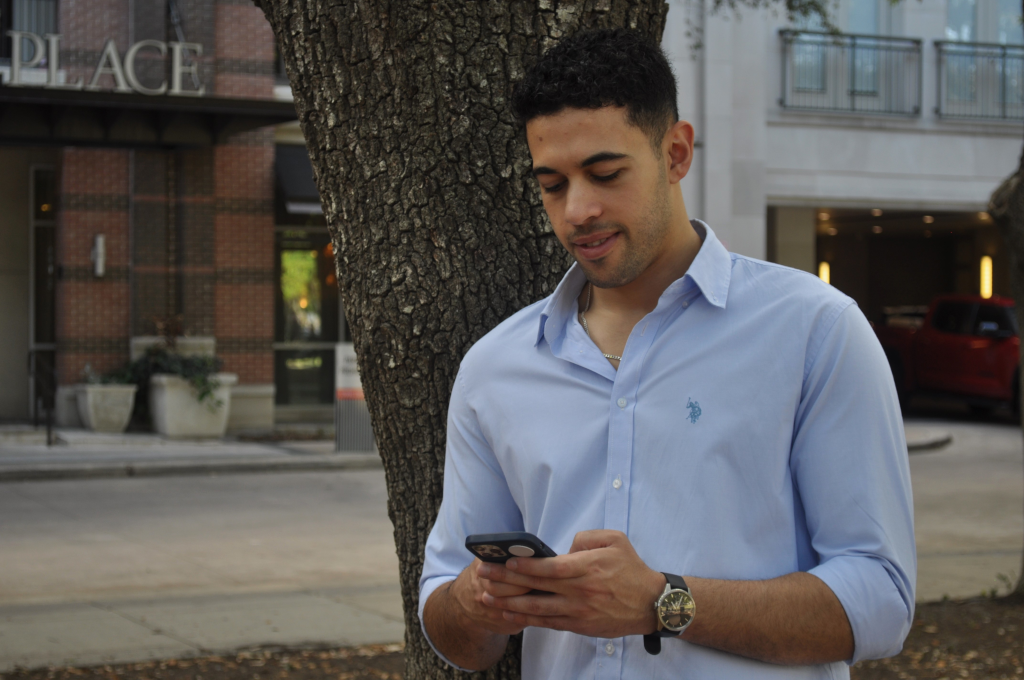
We are complicit. Those were Zaqout’s first words when ask about the situation in Palestine. “I’m not talking about it metaphorically. Our tax dollars literally pours in to it; like it’s a huge contribution to the suffering.” Zaqout expressed dismay with the American media not properly cover the conflict in Palestine; a small request is to be “aware what the media is doing to dehumanize us as human beings, so you don’t have to feel bad, it’s okay to feel bad some times. It would mean so much if people understand.” A notion for optimism is Americans can vote for the leaders in office, perhaps an elected official that would help Palestine. “Once a decision made on paper here is a catastrophe there,” he said.
To the sorrow of Zaqout, he does admit there’s not much an average American can do to help Palestine. Corporations will continue to lobby the governments, which means the media outlets will be fully objective. It may be time to read more Palestine literature, and fight against factions existing to dissuade the American public. “I know like it’s some way its hard to read everything and have the capacity to go over and analyze everything the different views. but just know that the war is never as simple as the media makes it. Intellectual laziness is never an excuse. If you don’t care, then don’t care. But if you really want to take a stand and if you really want to go out there then you have to be informed. If you’re someone who is going to a protest or do something that would hurt other people, you should do your homework.” Zaqout said. He experiences a certain level of dissatisfaction with some of the Americans he interacts with, but he willing to educate other, “we can learn from each other. I don’t have time and energy for people who don’t know much or don’t care.” he said.
Even a sliver of light can can infiltrate the blackest of nights, “I’ve become more hopeful about the world changing and more accepting as it is.” Zaqout said. “but a part of me thinks it will take time for me to be back and do things that inspire me again. I’m still very motivated.” Zaqout believes he can help Palestine, and it starts by being an expert in something. “If I ever have the power to help in other way, to bring Palestinians up and help them achieve better infrastructure, better health care, and education and inequality.”
In the end, what Zaqout spoke fondly about the most was the people in his life. People have so many layers and dimensions, but Zaqout simplifies it “overall I’d like to wake up and I want to spread love. People have gone through some stuff and deep down people have chills around themselves to hide their insecurities. People are scared and they want love.”
Zaqout hopes he can stop judging people, and people can stop judging others — perhaps then people can have better connections with one another. “My best memories in life are me putting a smile on someone’s face or me spending a moment with someone, that’s the realest time of my life. Taking about people, I do miss my own people, I do miss being in Palestine.” The feeling of being an outsider, or having sub-optimal connections can bear itself when the community isn’t thriving to it’s full potential. Zaqout strives for a community for whatever place he calls residence at the time. And for Palestine, they steps will present itself “I want to focus on my local kind of community, which is why I’d love to see at least in my lifetime that we free Palestine.”
“Know who you are, and be yourself. Give people grace. I always want to remind myself, I get sour sometimes, and defensive. I always regret it when acting from insecurity. Act from a place of love and be kinder to yourself.” that was his advice for life.
A twelve year old Mahmoud Zaqout picks up a few of the eggplants that had fallen from a broken crate at the local farmers market, then rubs the dirt off of them from his shirt before giving the produce to the market owner, who would then sell the same eggplants back to him. His parents assigned him job to get the vegetables for his family, but he has assigned himself the task to support his family in many other ways as much as possible and see that Palestine someday be free.